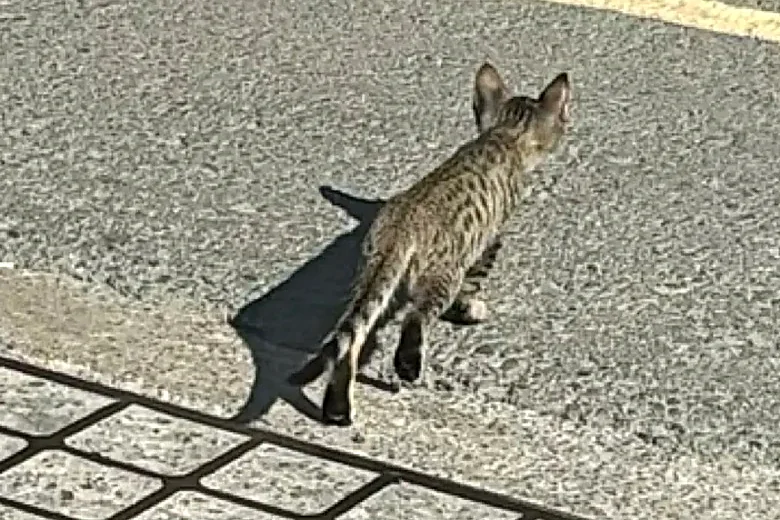
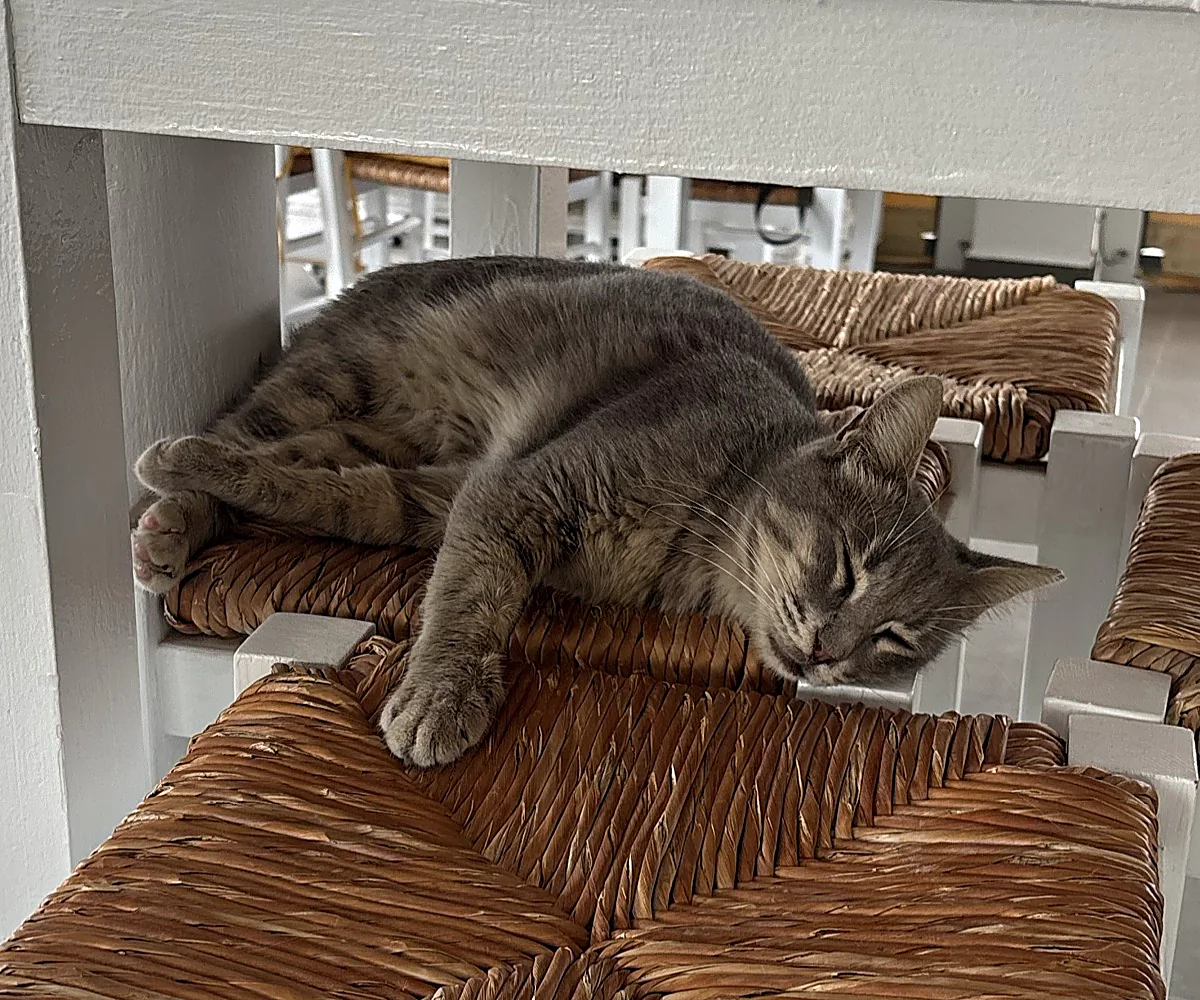
A cat sits on your doorstep, or follows you down the street, or turns up in the garden every evening. Your first thought is probably that it needs help. Sometimes it does. Often it’s fine, and the best help is to leave it be.
A cat you find outside is usually one of three things: someone’s pet out for a wander, a lost pet, or a street cat that lives outside. Each needs something different.
The short version
- Look for a collar or a tipped ear.
- Give it a day or two. Most cats outside aren’t lost.
- If it keeps coming back, ask the neighbours and local vets.
- Ask a vet to scan it for a microchip.
- If it’s hurt, a kitten on its own, or very ill, call a vet or rescue now.
Is it lost, owned, or a street cat?
A few clues help, according to the charity International Cat Care’s advice on stray cats:
- A collar. It has a home. A tag or a phone number makes the rest easy.
- A flat-cut ear tip. It’s a street cat that’s been neutered, and someone is probably already looking after it. Here’s how to spot an ear tip.
- Friendly, clean, tries to get into your house. Very likely someone’s pet, lost or just visiting.
- Scared and keeps its distance. Probably born outside. Street cats can be healthy and settled, and don’t need rescuing.

Give it a day or two
Cats roam. A pet can wander several streets from home and be back for dinner. International Cat Care suggests only looking further if the cat keeps coming back or stays out overnight.
Don’t feed it in the meantime, unless it’s clearly thin or weak. Feeding a pet that isn’t lost can keep it away from its own home, and that’s how cats really do get lost.
If you think it’s lost
- Ask around. Neighbours first, then local vets and rescues, in case someone has reported a missing cat.
- Post it. Local social media groups find a lot of lost pets. In Cyprus, where we’re based, neighbourhood Facebook groups are often the fastest way.
- Get it scanned. Any vet can read a microchip, and many will do it for free. A chip is how most lost pets get home.
- Try a paper collar. If the cat is friendly, a strip of paper with your number, asking the owner to call, works surprisingly well. Leave room for two fingers underneath, and don’t tape over all of it, so it tears off if it gets caught.
It’s worth the effort. In a large 2024 study across 20 countries, nearly 60% of lost pets never made it back to their owners.
If it’s hurt or very ill
Call a vet or a local cat rescue straight away. If the cat lets you, put it in a carrier or a sturdy box with a towel, and keep it somewhere quiet and warm until you can get help. Don’t give it any human medicine. Painkillers like paracetamol and ibuprofen are a common cause of poisoning in cats.
Not sure if it’s ill? Our guide to the signs a cat is sick covers what to look for.
If it’s a kitten on its own
Don’t pick it up straight away. The mother is often out finding food. Watch from a distance, and if she doesn’t come back within about three hours, call a rescue or a vet. Our kitten age chart shows how old it is and what it needs.
If it’s a street cat that lives here
Most street cats don’t need a new home. They need to be neutered, fed sensibly and left in peace. If it has no ear tip, tell a local cat group or your council. Many run trap, neuter and return programmes and will help.
If you want to feed it, do it in a way that helps. Here’s what to feed a street cat, and what not to.
Snap it with Island of Cats. A cat on the map is a cat someone has seen.