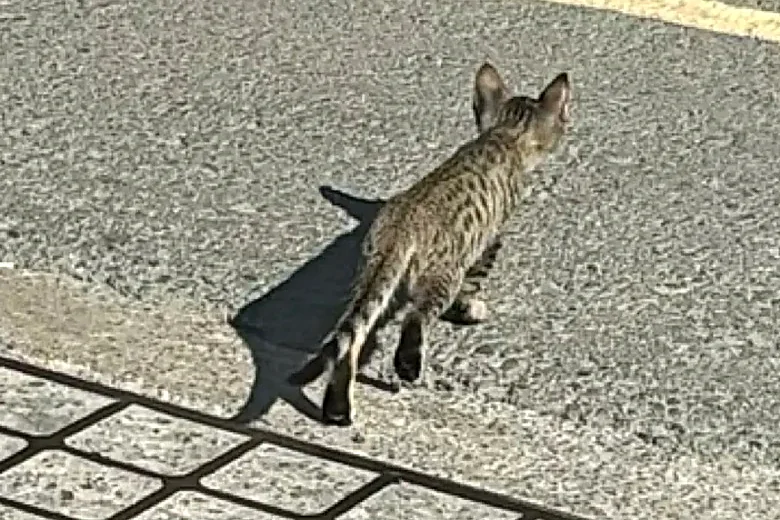
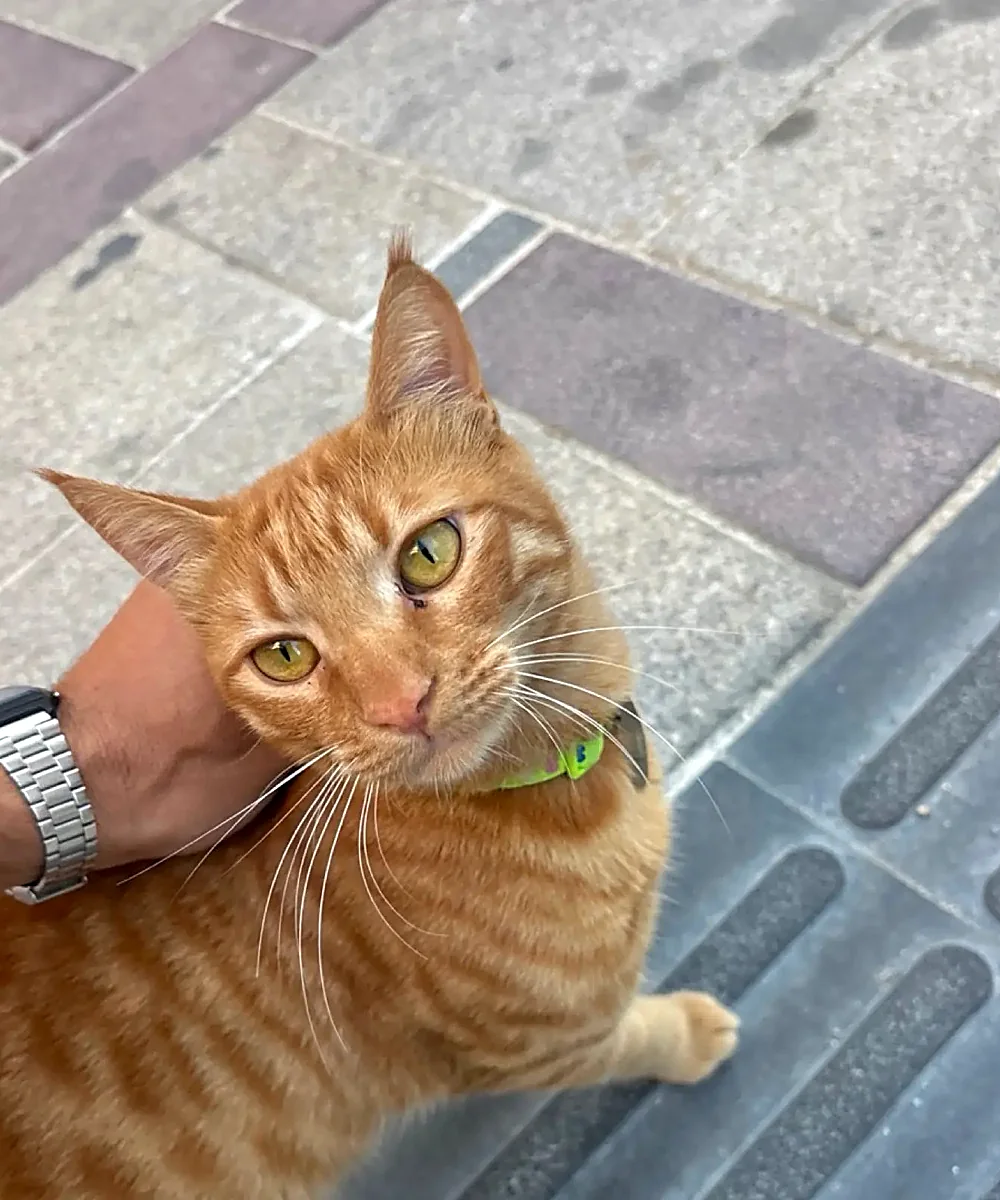
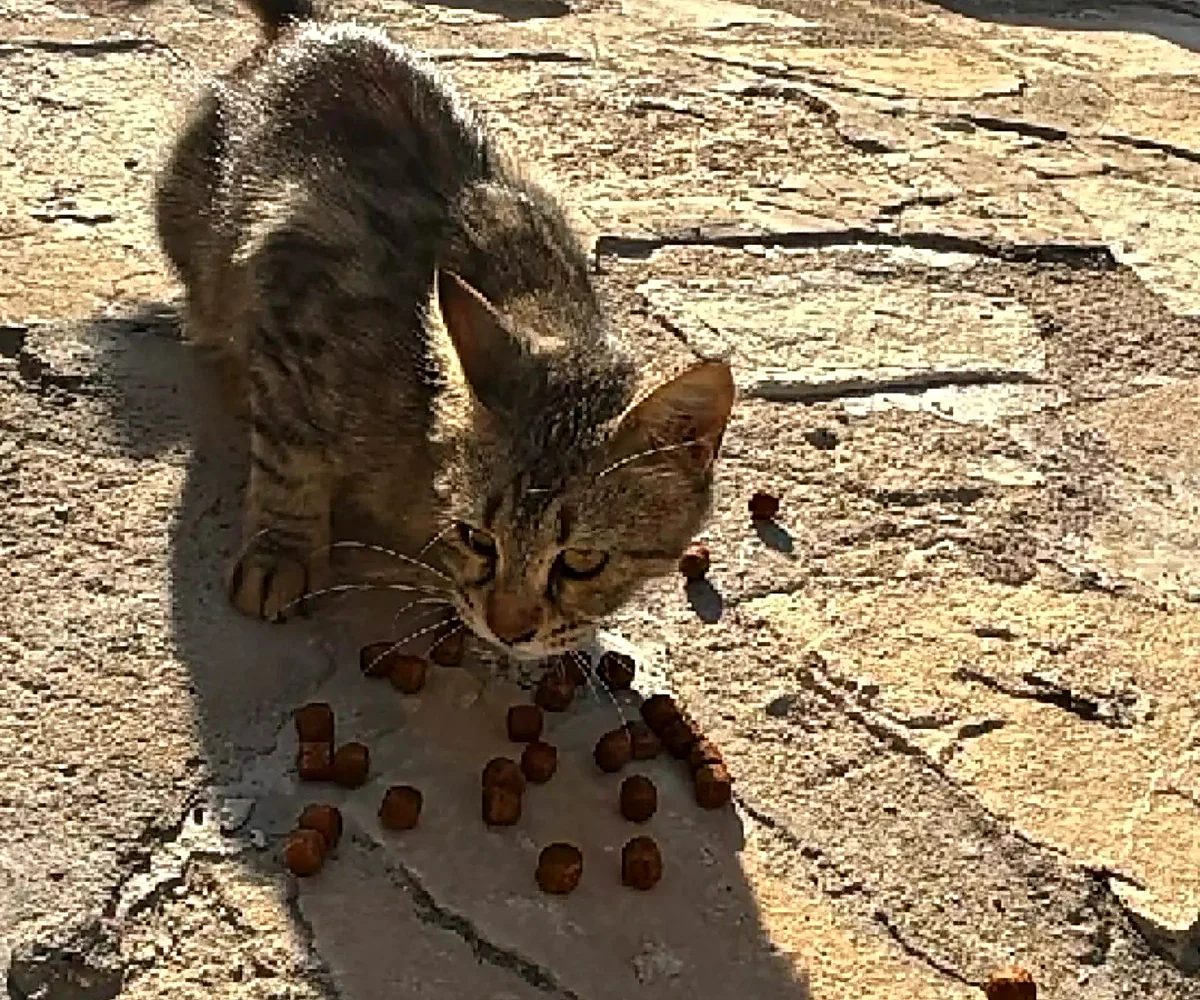
A healthy adult cat with a thick winter coat copes with cold surprisingly well. What gets to it is rain and wind. Wet fur stops keeping it warm, and a cat that can’t get dry for days gets ill.
In Cyprus, where we’re based, winter is mild by most standards, but it’s when nearly all the year’s rain falls, and nights in the hills drop close to freezing. Kittens, old cats and thin cats feel it first.
The short version
- Give them somewhere dry, off the ground, out of the wind.
- Fill it with straw. Not blankets, not towels.
- Keep the door small, and facing away from the wind.
- Feed a little more. Staying warm burns energy.
- Knock on your car’s bonnet before you start it.
A shelter you can make in an hour
Alley Cat Allies, a US charity that works with street cats, gives clear advice on shelters. A big plastic storage box with a lid works well:
- Size. About 60 by 90 cm and 45 cm high fits three to five cats huddled together. Smaller is warmer, so don’t go bigger.
- Door. Cut a hole about 15 to 20 cm wide. Big enough for a cat, too small for a dog. Put it several centimetres up from the bottom so rain doesn’t run in.
- Off the ground. Stand it on a pallet or a couple of bricks, so it doesn’t sit in puddles.
- Place. Somewhere quiet, against a wall or under bushes, with the door turned away from the wind.
If the cats don’t use it at first, give it a few days, then try moving it closer to where they already sleep.
Straw, not blankets
It feels kind to put an old blanket in. It isn’t. Blankets, towels and hay soak up water and stay cold and damp. Straw, the dry stalks left after a harvest, repels moisture, so cats can burrow into it and stay dry. It’s cheap too. Farm and garden shops sell it by the bale.
Check the shelter every week or two, and swap out straw that’s gone damp or dirty.
Food and water
Cats burn more food to keep warm, so a little extra in winter helps. Feed somewhere covered, so the food doesn’t turn to mush in the rain, and not right inside the shelter, where it draws other animals. Our guide to feeding street cats has more.
Knock before you drive
A warm engine is the cosiest spot on a cold street. Cats climb up into the engine bay and between the wheels, and starting the car can kill them. International Cat Care’s advice is simple: tap on the bonnet and look between the tyres before you start the engine. It takes five seconds.
Cats that need more than a box
Very young kittens, old cats, and cats that are thin, sneezing or have runny eyes struggle in wet weather. If one looks ill, call a local rescue or a vet. Our guide to the signs a cat is sick covers what to look for.
Snap the cats on your street with Island of Cats, so you notice when one stops turning up.