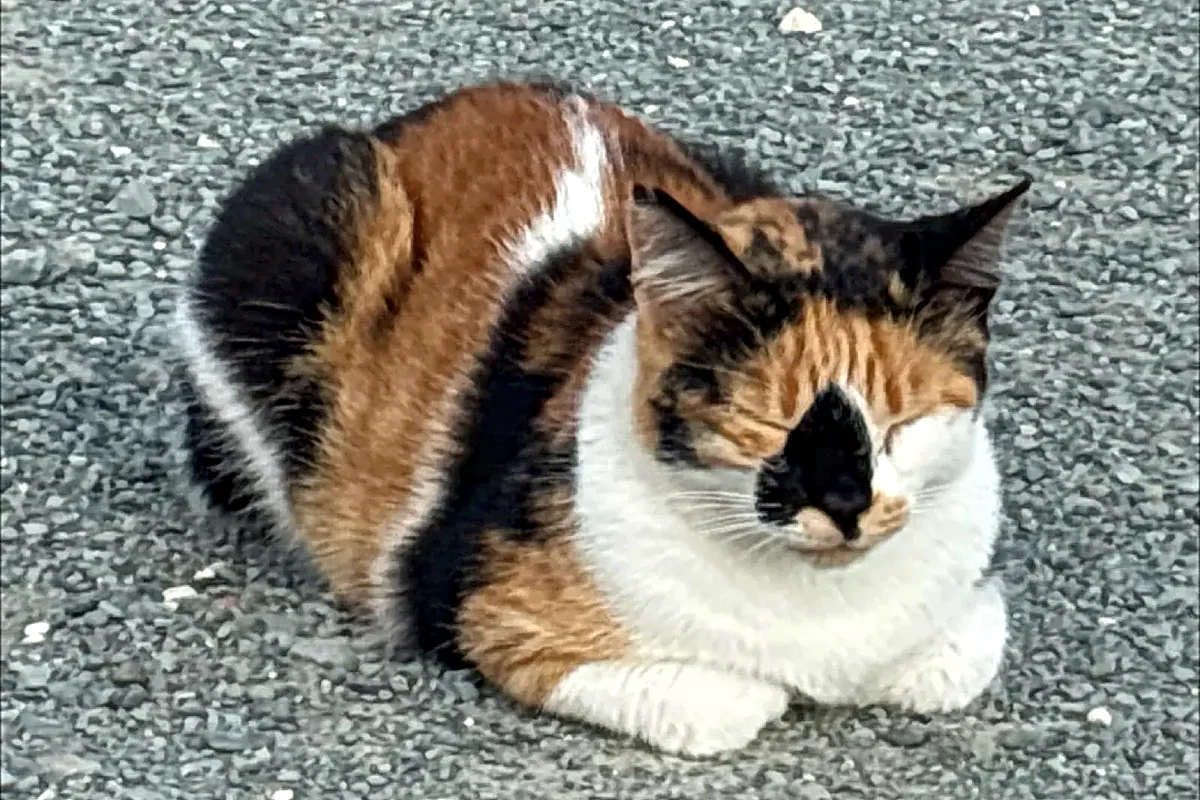
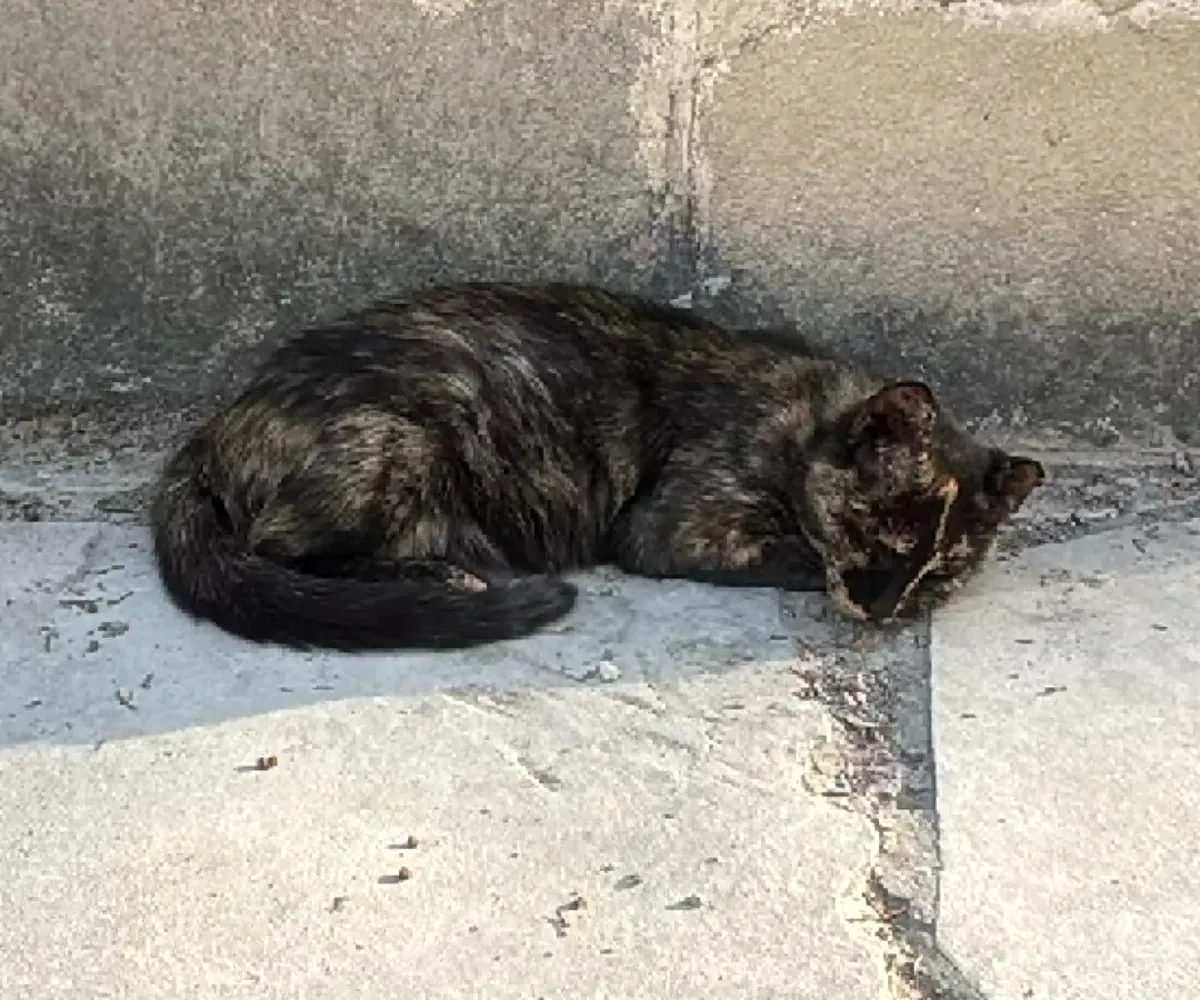
Walk down any street in Limassol and you’ll count the same coats again and again: tabbies, gingers, black-and-whites, the odd calico asleep on a car bonnet. That’s true almost anywhere in the world. Street cats breed freely, and the common genes win.
But cat coat genetics has some strange corners. Here are the rarest coats we know of, from the ones you’ll almost never see to the one you’ve probably already walked past.
Could you meet one on the street?
| Male calico or tortie | Yes, but rarely. About 1 in 3,000 calicos is male. |
|---|---|
| Split face | Yes, in theory. A handful are famous. |
| Chocolate, cinnamon, lilac, fawn | Almost never. They live in a few breeds. |
| Amber and russet | No. Each belongs to one breed. |
| True albino | Hardly ever. Most white cats aren’t albino. |
| Smoke | Yes. It hides inside “black” cats. |
The male calico
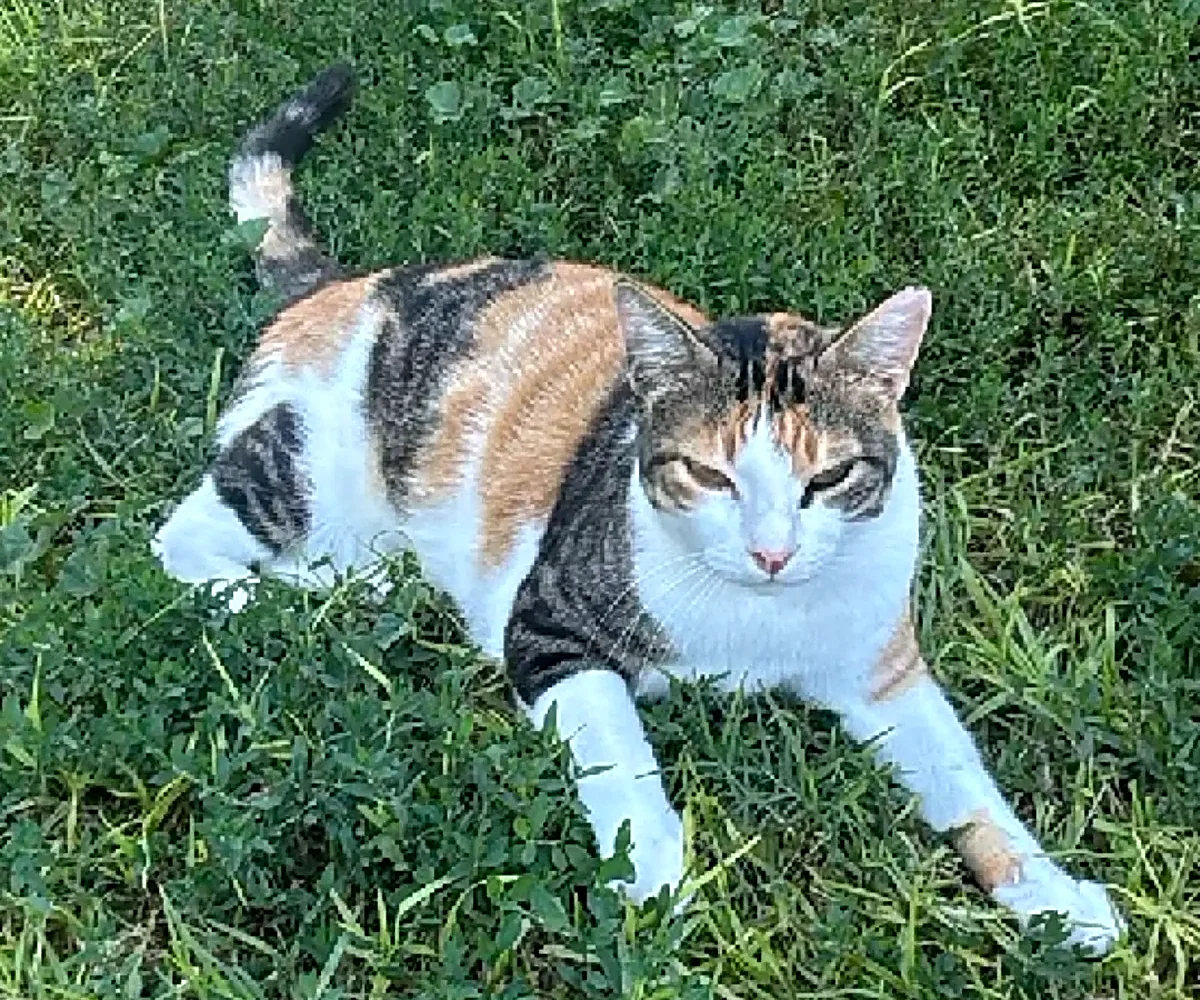
A calico’s orange and black come from a gene on the X chromosome. A cat needs two X chromosomes to show both colours at once, and that usually means a female. So when a calico or tortoiseshell turns out to be a tom, something unusual has happened.
Usually it’s an extra X: the cat is XXY instead of XY. Only about one calico in 3,000 is male, a figure from a University of Missouri study. Almost all of them can’t father kittens. When a shelter takes one in, it tends to make the local news. There’s the whole story in male calico cats.
You can’t tell by looking. If a calico you know turns out to be a tom when it’s neutered, you’ve met one.
The split face
Some cats look like two cats stitched together down the middle of the face. The most famous is Venus, a stray adopted in North Carolina, with a black half and a green eye on one side and a ginger tabby half and a blue eye on the other.
Cats like her are often called chimeras: one animal formed from two embryos that fused early on. That does happen, but it can only be proven with a DNA test. Geneticists who looked at Venus thought she was probably not a chimera, just a tortoiseshell whose colours happened to split cleanly along the middle. Either way, a face that neat is very rare.
Chocolate, cinnamon, lilac and fawn
Black fur has two rarer cousins. One version of the gene turns it chocolate, a rich dark brown. Another turns it cinnamon, a warm, lighter brown. Add the dilute gene that turns black into grey, and chocolate becomes lilac, a pale greyish lavender, while cinnamon becomes fawn.
These versions are recessive, so a kitten needs a copy from each parent. In breeds like the Havana Brown and the Oriental, breeders keep them going on purpose. On the street they all but disappear.
A street cat that looks chocolate is usually a black cat whose coat has gone rusty in the sun, or a brown tabby in warm light. Look at the roots: a sun-faded black cat is still black underneath.
Amber and russet
These two colours each belong to a single breed. Amber is a Norwegian Forest Cat mutation. Kittens are born looking like ordinary black or brown tabbies, then slowly turn golden as they grow. Russet is a different mutation in the same gene, found in Burmese cats, and it also lightens with age.
You won’t meet either on the street unless someone’s pedigree cat has got out.
The true albino
Most white cats aren’t albino. They carry a different gene, which hides their real colour under white fur, and they can have blue, green, gold or odd eyes.
A true albino cat makes no pigment at all, and it’s very rare. Its eyes are very pale blue, its nose and ears pink, and in a photo its eyes often glow red. Despite the cartoons, red-eyed albino cats may never have existed. Researchers who studied albino cats found the only report of one was probably a mistake.

Smoke: the one hiding in plain sight
A smoke cat looks solid black or grey from across the road. Part the fur, though, and every hair is silvery white at the root, with only the tip coloured. When the cat walks in the wind or stretches out in the sun, the coat seems to shimmer.
Smokes are a show colour in breeds like Persians and Maine Coons, but the gene turns up in street cats too, and most people never notice. Every black cat on your street deserves a second look.

Common doesn’t mean ordinary
The rarest coats are mostly bred, not found. But no two street cats are the same: a tabby’s stripes, a ginger’s white socks, the way a black-and-white’s patches land on its face. Every cat on your street is the only one of its kind.
Snap the cats on your street, rare or not. The rare ones only get found if someone looks.